
Group Practice Website Design: What You Need to Know
Growing your practice from solo to group is a big deal. It means you’ve built something worth expanding, and are ready to bring other talented clinicians alongside you to serve more clients. Which is something to be genuinely proud of! But something that often catches group practice owners off guard is that, the website that worked beautifully for your solo practice, may not do the same job for your growing team. Group practice website design is a different challenge entirely, and if your site has not grown with you, it could be working against you.
A well-designed group practice website can communicate the depth and warmth of your team, help the right clients find the right therapist, and make your practice look as polished and professional as the work you and your team do.
Here is what you need to know to get it right.
Why Group Practice Website Design Is Its Own Thing
A solo practice website is essentially a deeply personal introduction. One voice, one approach, one person. It is intimate by nature.
A group practice website needs to do something fundamentally different. It has to hold multiple personalities, specialties, and stories under one cohesive brand. It needs to help a visitor understand, not just what your practice offers, but who on your team is the right fit for them specifically. That’s a more layered experience and therefore requires more intentional structure.
When a group practice website is designed without this in mind, visitors might feel confused or overwhelmed. They land on a home page, see a long list of names and credentials, and don’t know where to go next. That friction, even if it feels small, is enough to send someone to a competitor's site instead.
A thoughtful group practice website removes that friction. It creates clear pathways, warm introductions, and a sense of ease that makes a potential client think: this practice gets it.
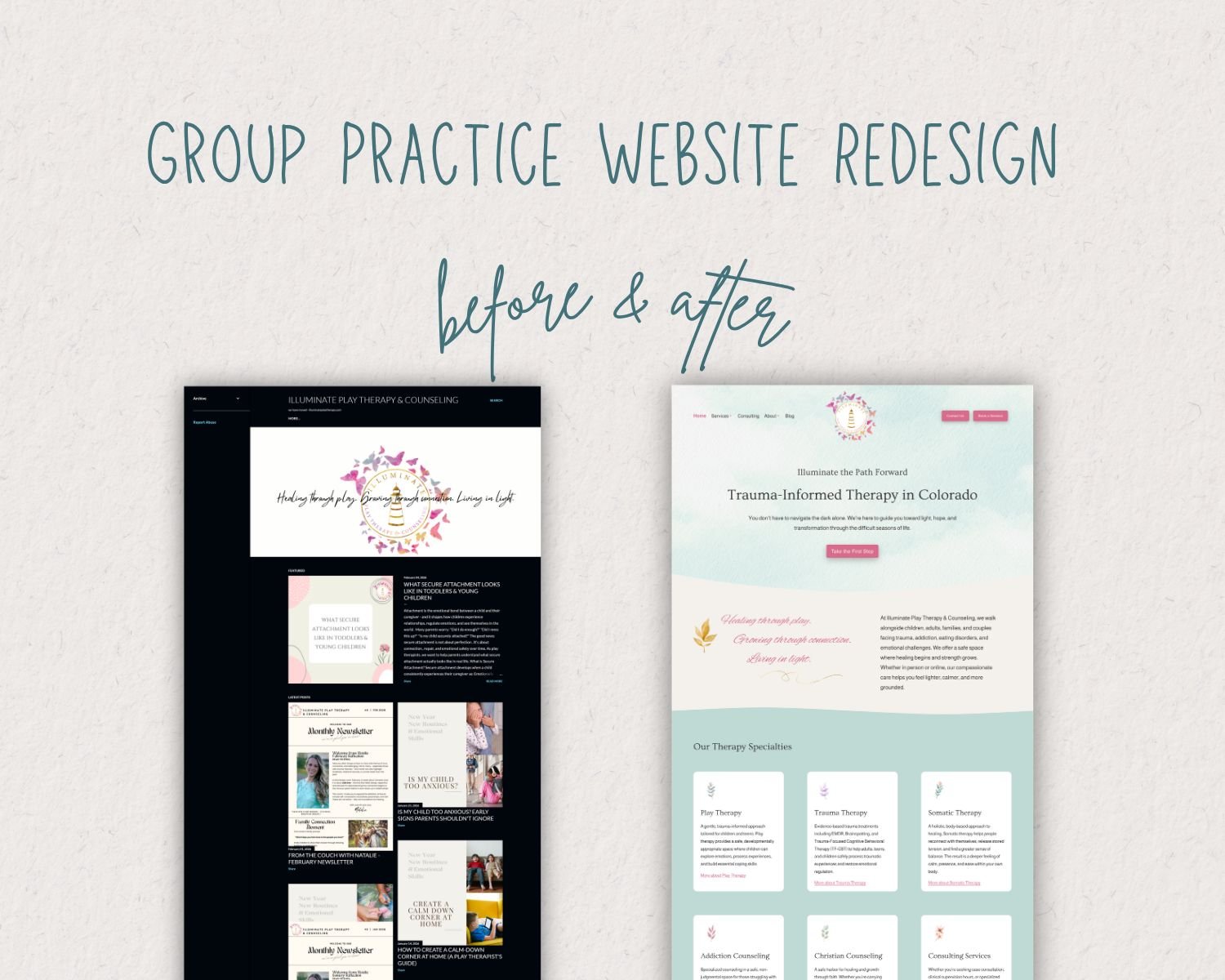
The Sections Your Group Practice Website Needs
A solo practice site might get by with four or five pages. A group practice generally needs a more robust structure. Here’s what that should look like:
A Home Page That Sets the Stage
Your home page is not the place to list every therapist and every specialty. I know it can be tempting to list everything right up front, but your home page should be designated for making a strong first impression, communicating your practice's overall mission and feel, and guiding visitors toward the next step. Think of it as the front door to your practice… warm, welcoming, and clear about what kind of space this is.
The most effective group practice home pages answer three questions immediately: who you help, what makes your practice distinct, and how to take the next step. Everything else can live deeper in the website.
A Team Page That Feels Human
This is the page where most group practices either shine or fall flat. A great team page does more than list headshots and credential strings. It gives each clinician a chance to feel like a real person.
That doesn’t mean you need to include everyone’s life stories. Shorter individual bios that capture a therapist's personality and approach will always outperform lengthy clinical summaries. Visitors are not evaluating credentials in isolation. They’re asking: do I feel safe with this person? Does this person seem like they would understand me?
If you have two or three team members, I suggest giving each their own individual bio page. This improves SEO since each clinician can rank for their own specialty keywords, and it gives potential clients a richer sense of who they would be working with.
However, if you have more than three team members, a single team page is the way to go. I like to use dropdowns here so you can view the team at a glance, without having a giant wall of text under each person. It keeps things simple visually, while still allowing you to include information for each individual. This approach also keeps visitors from having to read through multiple pages in order to “meet” each clinician.
A Clear Client Matching Process
This is a section that solo practices rarely need, but group practices almost always do: a straightforward explanation of how a new client finds the right therapist. Whether you use a consultation call, an intake questionnaire, or a therapist matching process, explaining this removes a lot of anxiety for someone who is already nervous about reaching out.
Make this process feel simple and supported, and potential clients will be much more likely to reach out.
Specialty and Services Pages That Showcase Your Offerings
One of the biggest advantages of a group practice is the depth of specialties you can offer. Your website should reflect that clearly, with dedicated pages for each major specialty area your team covers.
These pages serve two purposes: they give potential clients detailed, reassuring information about the support available to them, and they give Google clear signals about your practice's expertise. A group practice that treats anxiety, trauma, couples, and adolescents should have dedicated pages for each, not a single services overview that mentions them all in a list.
A Contact Page That Reduces Barriers
Your contact page should be warm, simple, and clear about what happens next. Include a brief note about response times, whether you offer a free consultation, and what the intake process looks like. The goal is to make reaching out feel like the obvious and easy next step.
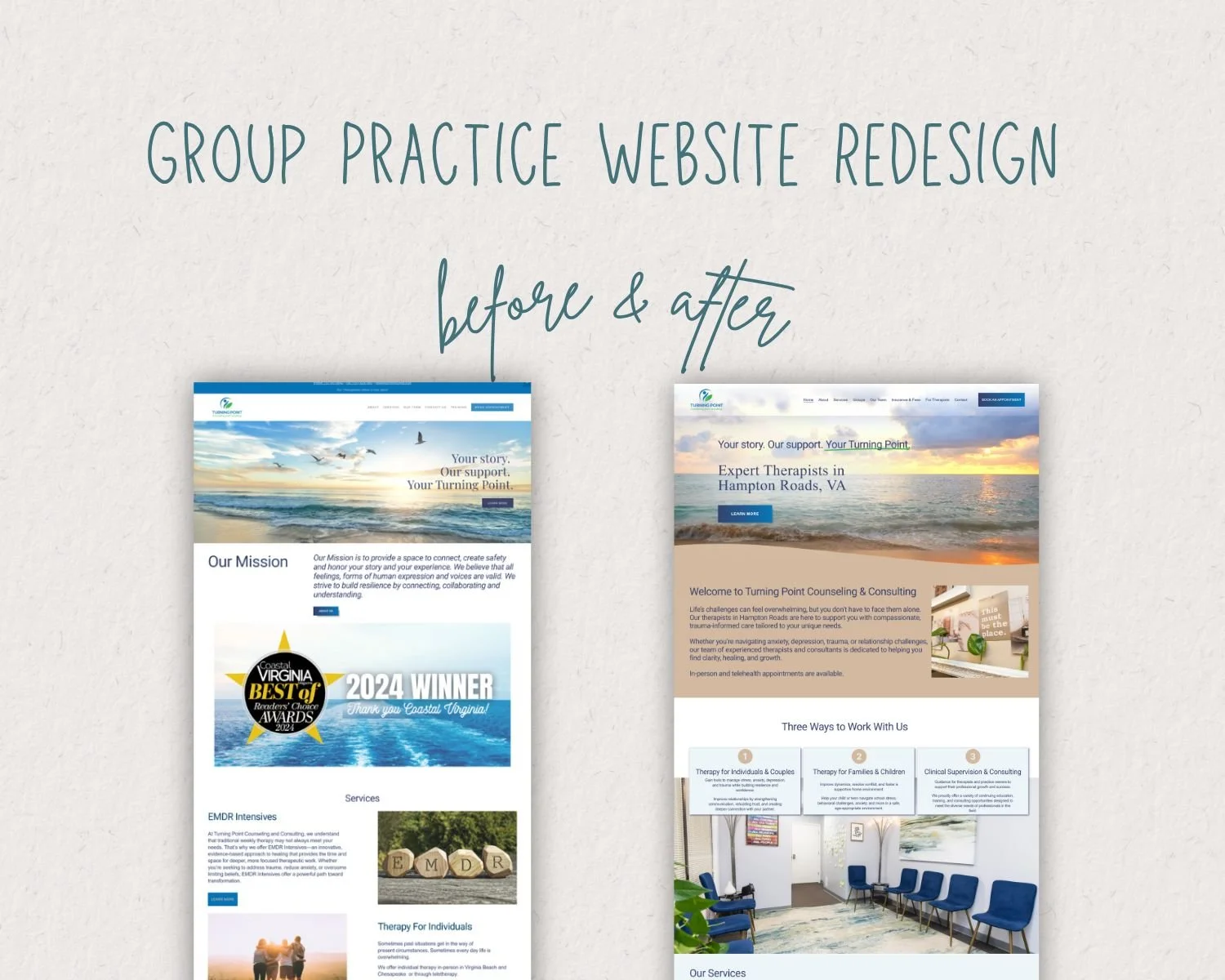
The Brand Challenge of a Group Practice
Maintaining a cohesive brand across multiple personalities is genuinely challenging.
Each clinician on your team has their own style, their own way of writing about their work, their own aesthetic preferences, and possibly their own specialties. Without a thoughtful brand framework in place, your website can start to feel inconsistent. Individual bio pages that were written by different people in different tones... Headshots taken in different lighting and settings... Specialty pages that do not match the warmth of your homepage… Yikes!
A strong group practice website starts with a defined brand. Think consistent color palette, font system, photography style, and tone of voice that every page follows. Just keeping this mind will help you make the overall experience feel cohesive, professional, and intentional.
If you’re in the process of growing your team, trust me when I tell you, it’s worth thinking about this now rather than retrofitting it later. Getting a new clinician's bio and headshot to match your existing site is much easier when you have clear guidelines from the start.
Navigation & User Experience Matter
When a visitor lands on a solo practice website, there is a natural simplicity to the experience. There’s one therapist to learn about, a handful of pages to browse, and one decision to make.
On a group practice website, the stakes for good navigation are higher. Visitors need to be able to move easily between team members, specialties, and service information without feeling lost. A cluttered navigation menu, too many clicks to find a bio page, or a home page that does not direct traffic effectively will cost you inquiries.
A few principles that make a real difference:
Keep your main navigation simple. Lead with Home, About or Team, Services or Specialties, and Contact. Everything else can live in sub-menus or supporting pages.
Use clear calls to action on every page. Do not make visitors hunt for the next step.
Make sure the site works beautifully on mobile. Most people searching for a therapist are doing so from their phone.
Use internal links thoughtfully. Link from a specialty page to the relevant team member's bio. Link from a bio to the specialties that clinician offers. Help visitors find their way naturally.
SEO for Group Practice Websites
One of the real advantages of a group practice website, when it is designed well, is SEO potential. A solo practice typically has one About page and a handful of service pages. A group practice can have a team page, individual clinician pages, multiple specialty pages, and location-specific content if you have more than one office. Each of these is an opportunity to rank in search.
A few places to focus your SEO energy:
Each clinician's individual bio page should include their name, their specialties, and relevant location keywords. Someone searching for a trauma therapist in your city is more likely to find a dedicated page about that clinician than a generic team overview.
Specialty pages should use the language your ideal clients are actually searching. "Teen therapy" will almost always outperform "adolescent mental health services" in search volume.
Your home page title and meta description should lead with the core service you provide, followed by your location. Clear and specific beats clever every time.
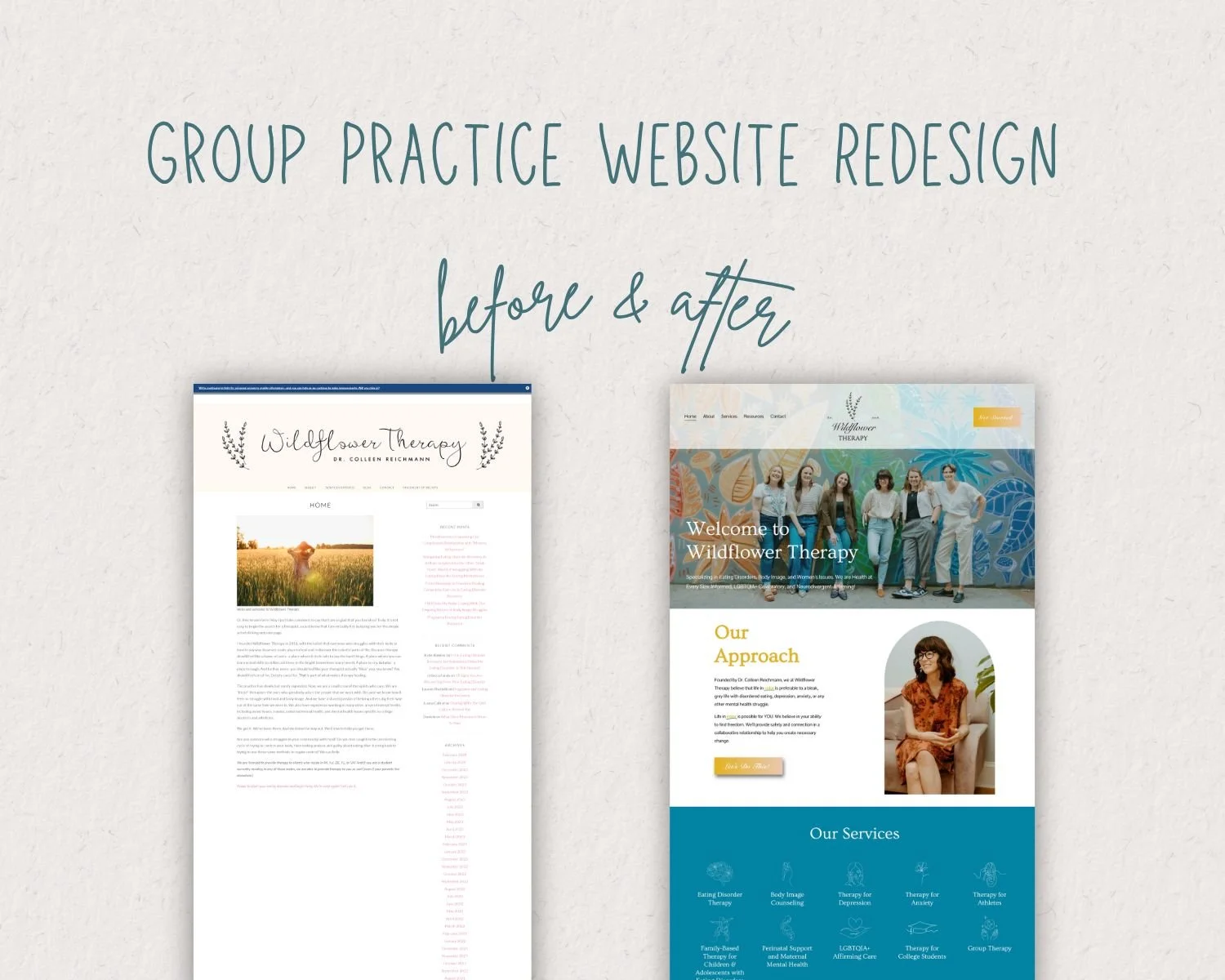
When to Redesign Your Group Practice Website
If any of these feel familiar, it may be time for a redesign:
You’ve added team members but your website still feels like a solo practice site
New clinicians' bios feel disconnected from the rest of the site
Visitors are not finding the right therapist and are dropping off without reaching out
Your site is not ranking for any of your clinicians' specialties
Your website was built quickly when you first launched and has never had a strategic overhaul
A group practice website redesign is an investment, but it’s one that pays back in more inquiries, better-fit clients, and a site your whole team can feel proud to share.
If Your Practice Has Grown
Designing a group practice website that feels warm, cohesive, and easy to navigate takes a clear strategy, a defined brand, and an understanding of how to hold multiple clinicians' voices within one unified online presence.
I love working with therapists through these exciting transitions from solo to group practice, creating beautiful websites to help grow their reach and attract the right clients. From site architecture to individual clinician pages, I’m here to help you build an online presence that feels mindful.
Ready to build a website that works for your whole team? Schedule a free consultation call to learn more.



Having a strong, recognizable brand will increase company awareness, differentiate you from your competitors, and help you establish credibility and trust with your audience.