
Website Accessibility: Why it Matters and How to Get Started
Website accessibility isn’t just about checking boxes or keeping up with best practices—it’s about making sure everyone who needs your services can access information, navigate your site, and reach out for support with ease. For therapy practice owners, accessibility is both an ethical consideration and a practical one.
Your work as a therapist is rooted in inclusion and creating a space where people feel safe and supported. So naturally, your website should reflect those same values. Let’s walk through what website accessibility really means, why it matters for your practice, and how to get started—without overwhelm.
What Is Website Accessibility
Website accessibility means designing and building your website so people of all abilities can use it. This includes individuals who rely on screen readers, keyboard navigation, captions, high-contrast text, or other assistive technologies.
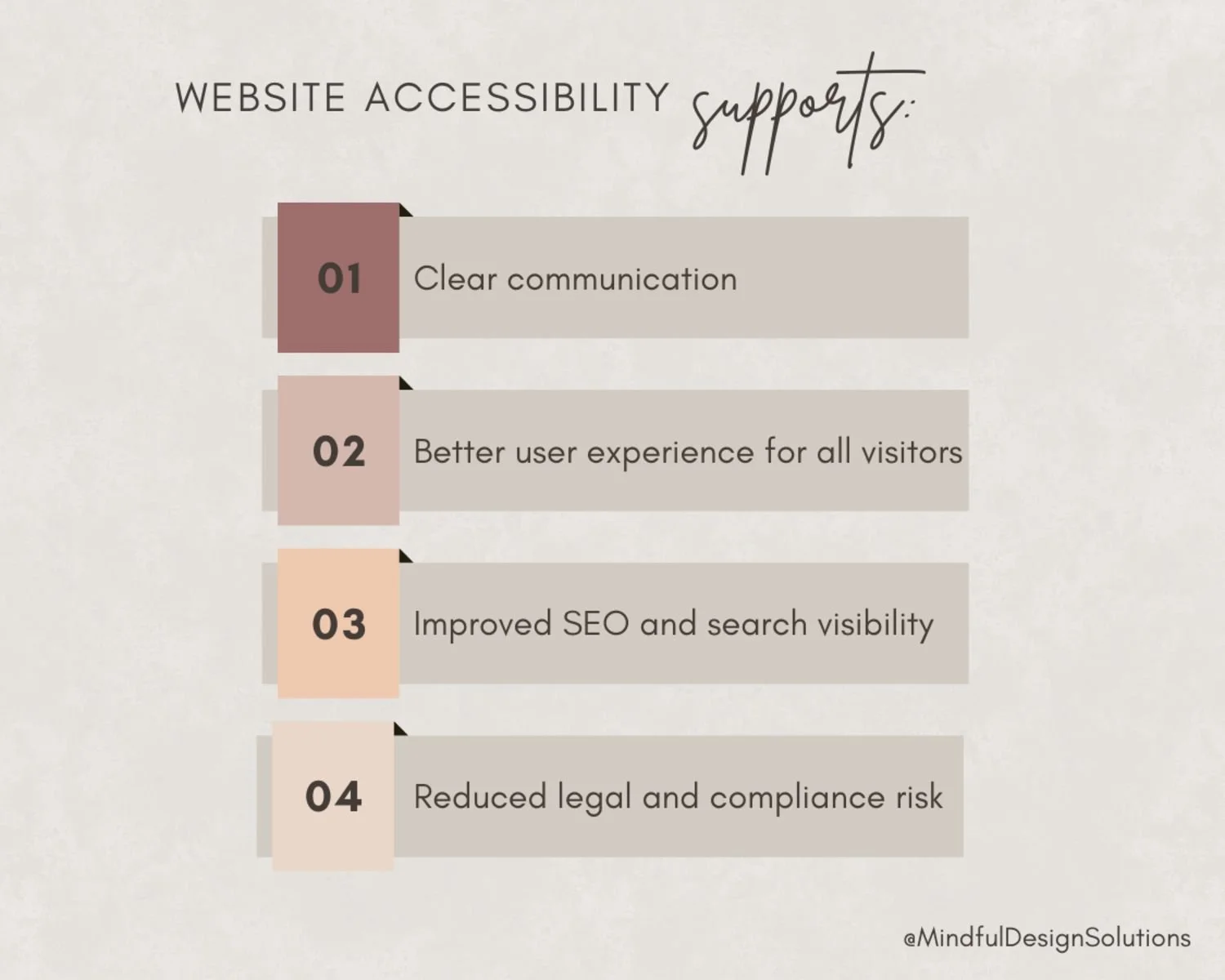
Many clients seeking therapy live with disabilities, neurodivergence, chronic illness, or temporary impairments. If your website is difficult to navigate or read, you may be unintentionally creating barriers for a client to work with you. Accessibility also supports clear communication, creates a better user experience for all visitors, improves SEO and search visibility, and reduces legal and compliance risk.
In other words, accessibility is good care and good business.
Is Website Accessibility Required for Therapy Practices?
This is where things can feel confusing.
While the ADA (Americans with Disabilities Act) doesn’t explicitly spell out website rules for private therapy practices, websites are increasingly viewed as “places of public accommodation.” That means inaccessible websites can carry legal risk—especially as enforcement and awareness continue to grow.
More importantly, accessibility demonstrates professionalism, ethics, and inclusion. It signals to potential clients that you’ve thought about their experience before they even step into your office (or virtual session).
Common Accessibility Barriers on Therapist Websites
I see these often, especially on DIY or template-based sites:
Low color contrast that makes text hard to read
Missing image alt text (this is the text that screen readers use)
Headings that aren’t structured properly (also needed for screen readers)
Navigation that can’t be used with a keyboard
Forms that are confusing or inaccessible
Tiny fonts or long blocks of dense text
The good news? Many of these issues are fixable once you know what to look for.
Why Squarespace Is a Great Choice for Accessible Websites
Squarespace is (obviously) my favorite platforms for therapists—and accessibility is a big reason why.
That’s because Squarespace offers:
Clean, semantic HTML structure
Responsive designs that work across devices
Built-in accessibility considerations in many templates
Easy control over headings, fonts, spacing, and contrast
Compatibility with screen readers when content is structured correctly
That said, Squarespace DOES NOT automatically make your site accessible. Accessibility depends on how the site is built, the content choices you make, and how thoughtfully everything is put together.
This is where strategy matters—not just design.
How to DIY Website Accessibility
If you’re maintaining your own website, here are a few foundational steps you can take:
Use proper heading structure (H1, H2, H3—not just bold text)
Add alt text to all images
Check color contrast for readability
Make links descriptive (avoid “click here”)
Test keyboard navigation
Write clear, scannable content
When It Makes Sense to Get Support
Accessibility can get technical quickly, especially when balancing compliance, SEO, branding, and user experience.
If you feel you could use some guidance, having support from someone who understands therapists, wellness businesses, and the nuances of this work can make the process feel much more manageable. My role is to help create Squarespace websites that are accessible, thoughtfully structured, and aligned with your values—so your online presence feels clear, welcoming, and supportive to the people you hope to serve.
If your website feels outdated, hard to navigate, or out of alignment with your work, I’d love to help you create a Squarespace website that feels inviting, inclusive, and clear—without the overwhelm. Schedule a free consultation to explore what’s possible.
Related Posts


You built your website to welcome the right clients — the ones searching for exactly the kind of support you offer. But here’s the thing: if Google doesn’t know your site exists, those potential clients may never find their way to you.