
The terms web copy and web content get used interchangeably all the time — even by marketing professionals. But they're not the same thing, and understanding the difference can genuinely shift the way your website works for you.
Whether you're building your first therapy website or refreshing one that's quietly been bothering you, knowing what each one does will help you create an online presence that feels clear, intentional, and like you.
Let's walk through it together.

What Is Web Copy?
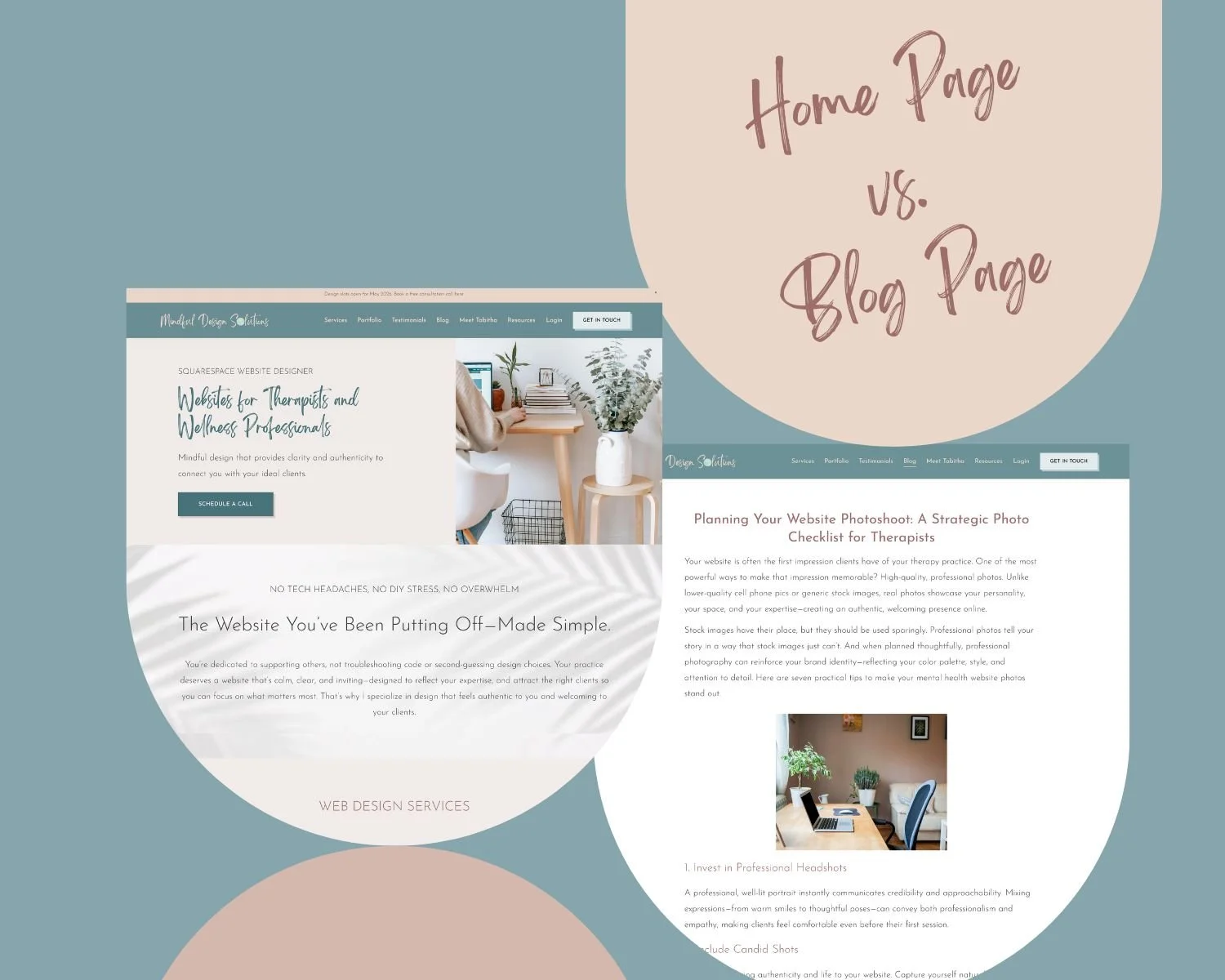
Web copy is the strategic, purposeful writing that lives on the core pages of your website. Its job is to guide visitors toward taking a next step — booking a consultation, reaching out, or signing up for your newsletter. It creates connection, communicates your value, and warmly invites people in.
Where you'll find web copy:
Your Home page → the first impression that sets the tone for everything
Your About page → where your story becomes someone's reason to trust you
Your Services pages → explaining who you help and how
Your Contact page → making it feel safe and easy to reach out
Call-to-action buttons and taglines → those small but mighty phrases like "Book a Free Consult" or "Let's Connect"
Good web copy is strategic and human at the same time. It understands your ideal client — their fears, their hopes, the exact words they type into Google when they're looking for someone like you — and it speaks directly to them.
What Is Web Content?
Web content is the educational, informational, or inspiring material you create and share over time. Its goal is to offer value, to answer questions, build trust, and help people feel understood before they ever reach out to you.
“If web copy is the conversation you have when someone walks through your door, web content is the trail of breadcrumbs that led them there in the first place.”
Where you'll find web content:
Blog posts → like this one!
FAQs → answering the questions your ideal clients are already asking
Resources and guides → downloadable tips, worksheets or educational material
Video scripts or podcast show notes embedded on your site
Web content plays the long game. It tells search engines that your site is active, relevant, and worth surfacing for the people searching for what you offer. For therapists and wellness professionals, that might mean writing about what to expect from a first session, how to support a loved one through a hard time, etc.
Every piece of content you publish is another doorway into your world. And each one is an opportunity for the right person to find you at exactly the right moment.
So What's the Actual Difference?
The simplest way to put it:
“Web copy sells with warmth and authenticity. Web content educates with depth and care.”
Web copy is largely fixed. Your homepage doesn't change every week. It's written with intention, refined over time, and built to do one important job: help the right people feel like they've found the right person.
Web content, on the other hand, grows with you. It layers over time, evolves as your practice evolves, and keeps showing up for your audience long after you hit publish.
Both matter. And both should feel like you.
Why Your Therapy Website Needs Both
When someone lands on your website, they're often searching for support, for clarity, or simply for someone who understands what they're going through. They need to feel two things almost immediately:
That you get what they're experiencing
That you're the right person to help them through it
Your web copy creates that first feeling through intentional language that’s warm, clear, and grounded in your personality. Your web content builds the second feeling over time, by consistently showing up with insight, empathy, and genuine care for the people you serve.
Together, they create a website that doesn't just exist. It connects.
From an SEO standpoint, strong copy on your core pages helps search engines understand who you are and who you help. A consistent content strategy like a simple blog updated monthly, keeps your site fresh, signals to Google that your practice is active, and increases the chances that your ideal clients find you when they're ready.
A Few Common Mistakes I See (with so much love)
Even the most thoughtful, dedicated practitioners can fall into these traps. I see them often, so let's talk through them.
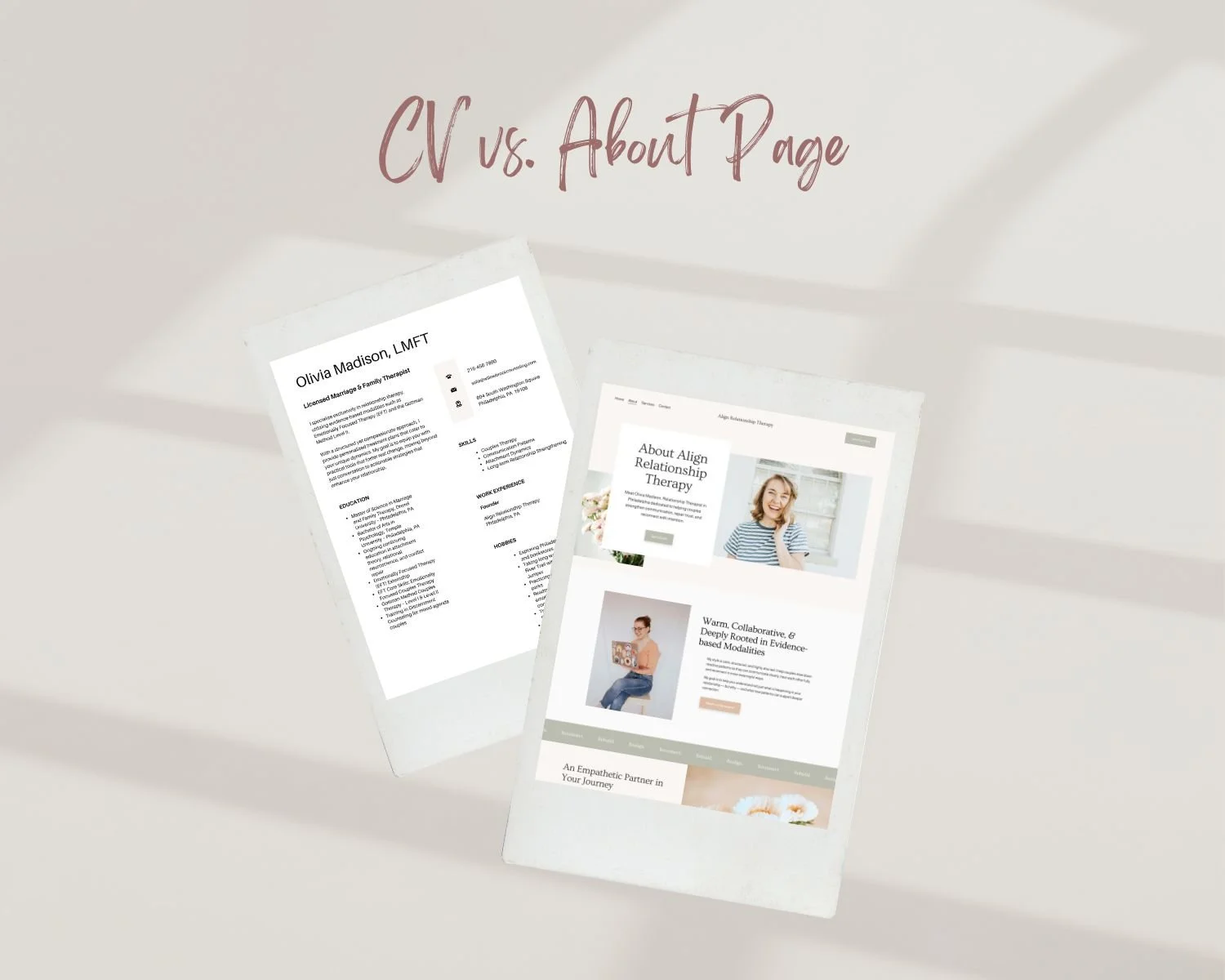
Writing your About page like a CV.
Your credentials matter, of course! But people visiting your site want to know who you are, what you believe, and what it actually feels like to be in your care. Let your personality show up. It's one of the most powerful things your website can do.
Skipping content altogether.
If your site only has Home, About, Services, and Contact, you're missing a beautiful opportunity to build trust and show up in search results. A simple blog, even if you just post once or twice a month, makes a real difference over time. You don't have to write a novel. Just write from where you are.
Using the same tone for everything.
Your Services page should be clear and action-oriented. Your blog can be a little warmer, more exploratory, more like a genuine conversation. Write a little differently in different spaces on your site.
Writing for search engines instead of real people.
SEO absolutely matters (I talk about it often). But write first for the human being who needs you. The right keywords, woven naturally into content that genuinely serves your reader, is the sweet spot. Speak to people first and the results will follow.
Where to Start
If you're in the early stages of building or refreshing your website, start with your copy. Get clear on who you serve, what you offer, and how you want someone to feel when they land on your page. That clarity is the foundation everything else gets built on.
Once your core pages feel aligned and authentic, start layering in content. Choose topics your ideal clients are already wondering about. Write the way you'd explain something to a colleague over coffee.
You don't have to do it all at once. A website that grows intentionally over time is far more impactful than a perfect site that never evolves.
Therapists and wellness professionals truly do some of the most important work in this crazy world. You help people find their footing again. You hold space for healing, growth, and transformation every single day. And your website should reflect that depth of care, not just in how it looks, but in what it says, and how it keeps showing up for the people who need you most.
Understanding the difference between web copy and web content is a small step, but it's a meaningful one. And I'm really glad you're here, taking it.
Related Posts


You built your website to welcome the right clients — the ones searching for exactly the kind of support you offer. But here’s the thing: if Google doesn’t know your site exists, those potential clients may never find their way to you.