You probably already know that SEO keywords matter. But which ones actually belong on your website? It's one of the most important first steps in your design process, and also one of the easiest to get wrong without a clear starting point.
The good news is, you don't need special software or a marketing degree to find them. Most of what you need can easily be found in your intake calls, your consult notes, and the way your own clients describe what brought them to you.

Why Keywords Matter in the First Place
A keywords are the actual phrases someone types into Google when they're looking for help. If your website never uses the words your ideal client is searching, it doesn't matter how beautiful or well-written your site is. It simply won't show up.
The right keywords help the right people find you, and they also help Google understand who your site is for, which matters just as much as the person reading it.
Where to Actually Find Your Keywords
1. Start with how your clients already describe their problem.
Think back to recent consult calls or intake forms. What words do people use before they know the clinical term for what they're experiencing? Someone might search "why can't I stop worrying about my kids" long before they'd ever type "generalized anxiety disorder." Both are worth knowing, but the plain-language version often has less competition and more intent behind it.
2. Get specific about your specialty.
"Therapist" alone is a crowded, competitive term. "therapist for postpartum anxiety" or "trauma therapy for first responders" is far more specific, and far easier to rank for, because you're not competing with every therapist in your city. Specificity is one of the best SEO advantages that mental health professionals have.
3. Don’t skip location.
Even with a great website, local search matters enormously. Phrases like "EMDR therapist in Philadelphia" or "Philadelphia counseling for teens" should show up naturally across your site, not just buried in your footer.
Many people searching for a therapist still start with a location, whether they're looking for someone licensed in their state, or they simply assume therapy happens in person. Either way, it's worth including your service area even if you only see clients virtually. This tells Google (and your potential clients) exactly who you're able to help, in-person sessions or not. If you work with clients across an entire state, phrases like "online therapist for Pennsylvania residents" can do that work for you.
4. Find out where people are already finding you.
You likely have more data than you realize, and most of it is free. Your Google Business Profile insights and your Psychology Today profile both show which search terms are already bringing people to your listing. If you already have a website, Squarespace Analytics, Google Search Console, and Google Analytics can go a step further, showing you the exact phrases people searched before landing on your website, as well as which pages they visited once they got there. Together, this is free, direct evidence of real search behavior, not a guess, so it's worth checking regularly rather than setting your keywords once and moving on.
5. Use Google as a free research tool.
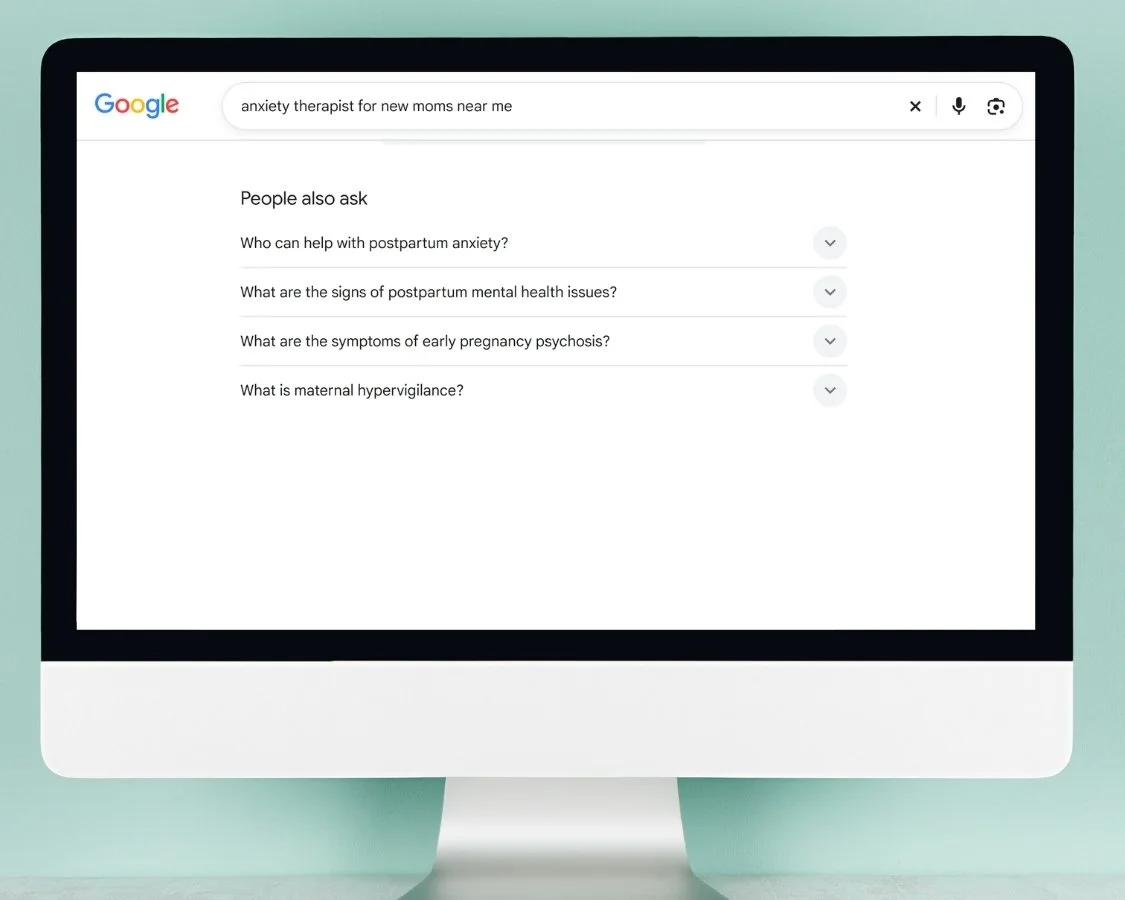
Type a phrase related to your specialty into Google and look at the "People also ask" section. These are real, common searches, not hypothetical ones, and they may surface phrasing you wouldn't have thought to search yourself.
6. Try a dedicated keyword research tool.
If you want more data behind your choices, tools like SEOSpace, Moz, Ahrefs, and SEMrush can show you search volume and competition for specific phrases so you're not just guessing which version of a keyword performs better. Most offer a free trial or a limited free tier, which is usually enough to research keywords for a single website. Think of these as a way to confirm or refine what you've already gathered from your clients, your specialty, and Google's own suggestions, not as a replacement for them. Real conversations with real clients will always outpace what a digital tool can tell you.
How to Use Your Keywords Once You Have Them
Finding the right words is half the work. Where you place them is what turns them into visibility.
Page Titles & Headers
Your home page and service pages should clearly reflect what you specialize in, using language your ideal client would actually search. Use keywords in all of your page titles and in headings/subheadings.
Service Page Copy
If you treat more than one issue or population, give each its own page. A page dedicated to "play therapy for kids" will outperform a single generic "services" page every time.
Meta Descriptions
This is a valuable, often-overlooked space to naturally include your primary keyword alongside a clear, human description of what you offer.
Image Alt Text
A small detail that quietly reinforces your keywords and improves accessibility at the same time.
Blog Content
Each post is another opportunity to target a specific phrase your ideal client might search, especially longer, more conversational ones. Blogging is one of the most effective tools in your marketing toolkit. A well-written post can position you as an expert, to both your readers and to Google, and it rarely does just one job. The same post can be repurposed into a newsletter and social media posts, driving even more traffic to your website.
Google Business Profile
Make sure your category and business description match the terms people in your area are actually using. Revisit it often to keep it accurate and current, since specialties, service areas, and even your availability can shift over time.
A Few Things to Avoid
Keyword stuffing.
Repeating a phrase unnaturally doesn't help you rank (in fact, Google may even penalize your website for this). Plus, it reads poorly to real visitors. Always, always write for humans, not search engines. Using keywords twice per page, placed naturally, is actually plenty.
Relying only on clinical language.
Terms like "dialectical behavior therapy" matter, and lots of informed people do search clinical names. The risk is relying on that language alone, since someone earlier in their search is more likely to use plain, everyday words instead. So be sure to work in both.
Treating your keyword list as permanent.
What people search for shifts over time, and so might your specialties. Revisiting your keywords once or twice a year keeps your site aligned with how people are actually searching now. And what you’re currently offering.
A Simple Place to Start
Open a blank doc and write down the exact words a recent client used to describe their problem before they came to you. Add your specialty and your service area to that same list. This is often a better keyword starting point than any tool could generate for you.
Want Help Finding the Right Words for Your Practice?
Figuring out which keywords actually fit your practice can feel like guesswork, especially when you're too close to your own work to see it clearly. If you'd like a second set of eyes on where your website's language could be working harder, schedule a free consultation and we'll talk through it together.